
Common Sparrowhawk
Accipiter nisus Linnaeus, 1758
Қырғи


 1 / 3
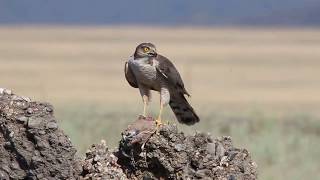
male Almaty. Republic Square. Park.
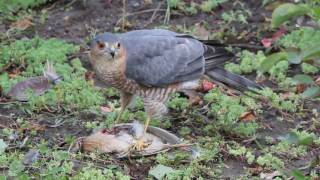
female Almaty. Republic Square.
juvenile Almaty, Republic Square
- status in Kazakhstan
- nests here · on migration · winters here
- conservation status
- IUCN LCleast concern
- sizes
- 28–41 cm, wingspan 55–78 cmweight 100–220 g
- when to see it
- March — Novemberwinters: December — February
- on the site
- 1551 observationslast: 1 Nov 2026
- videos
- 9
Description
Внешностью очень похож на тетеревятника, но гораздо меньше, с голубя или несколько крупнее. У самца сизо-серый верх, снизу по светлому фону рыжие, коричневые или бурые поперечные полосы. Самка значительно крупнее самца, сверху серо-бурая, снизу тоже полосы по белому фону, но серые. Самку легко спутать с тетеревятником, если нет возможности точно оценить размеры. У перепелятника более длинный хвост, узкий в основании, с прямоугольным обрезом, не закругленный. Глаза у взрослых ярко-желтые или оранжевые. Молодые похожи на самку, но с охристыми вершинами перьев на темном верхе, с менее четкой полосатостью низа и явным бурым налетом на нижней стороне тела и крыльев, пестрины более вытянуты вдоль тела, часть их может быть сердцевидной формы. Глаза у молодых бледно-желтые. Как у взрослых, так и у молодых часто бывает на затылке беловатое пятнышко неопределенной формы. Полет очень маневренный и быстрый - чередование серий взмахов и скольжения. Парением пользуются редко. Вес самцов 100-220, самок - 180-340 г, длина 28-41, крыло самцов 19.6-21.2, самок - 23.1-25.6, размах 55-78 см.
Distribution
Breeds in middle current of Ural, in mountain and foothills of eastern, south-eastern and southern Kazakhstan, and in some places of northern Kazakhstan. On migration occurs widespread, winters mostly in south of Kazakhstan. Please see detailed distribution in the section Subspecies.
- I
- II
- III
- IV
- V
- VI
- VII
- VIII
- IX
- X
- XI
- XII
- Breeding
- Migration
- Wintering
Map © Birds.kz. Copying without permission is prohibited
Subspecies
- Eurasian Sparrowhawk Accipiter nisus nisus
- Siberian Eurasian Sparrowhawk Accipiter nisus nisosimilis
- Common Sparrowhawk Accipiter nisus dementjevi
Latest observations
all species photos · 1551 →
 2
 2
 4
Species videos · 9
all species videos · 9 →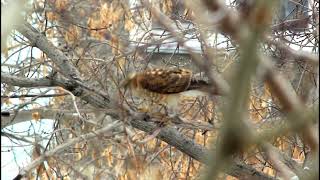

Biology
Common breeding migrant. Inhabits the coniferous and deciduous forests on plains and in mountains up to 2500 m in Zailiyskiy Alatau. In southern areas appears in March; most birds migrate in April and some observed until mid-May. To northern areas Sparrowhawk migrates in April - May. It needs to note that all late migrants caught at Chokpak Pass in April - May were immature second year birds. Breeds in separate pairs not close one to other. Nest is built in various trees, both deciduous and coniferous species (spruce, fir, apple, birch or aspen), at 2-10 m above the ground. Nest is built from dry twigs and is lined with old grass. Sometimes Sparrowhawks repair and use for breeding the old nests of Magpies. Clutches of 2-5 (usually 3-4) eggs is in mid-May – June. Female incubates for more than 30 days from the laying of the first egg and cares for chicks; male brings food for them. When chicks are well grown the both parents begin to fly for prey. Juveniles leave the nest in July - August and stay nearby nest for a long time, dependent from parental feeding. Autumn migration begins in end of August and continues until November, peaking in September - first half of October.
Sources
Gavrilov E. I., Gavrilov A. E. "The Birds of Kazakhstan". Almaty, 2005. Э.И.Гаврилов. "Фауна и распространение птиц Казахстана". Алматы, 1999. В.К.Рябицев. "Птицы Урала, Приуралья и Западной Сибири". Екатеринбург. Изд-во Уральского университета, 2000.