
Eurasian Goldfinch
Carduelis carduelis Linnaeus, 1758
Кәдімгі пайыз

 1 / 2
adult Taraz
juvenile Kostanai oblast, Karabalyk region, Toguzak river
- status in Kazakhstan
- nests here · on migration · winters here
- conservation status
- IUCN LCleast concern
- sizes
- 13–16 cm, wingspan 23–29 cmweight 13–21 g
- when to see it
- March — Octoberwinters: November — February
- on the site
- 468 observationslast: 8 Oct 2026
- videos
- 3
Description
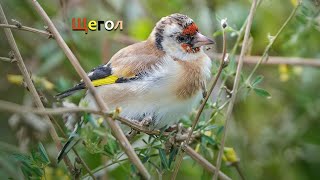
Немного меньше воробья. У взрослых птиц вокруг клюва ярко-красное лицевое пятно, щеки белые, темя, затылок и бока шеи черные. Спина коричнево-бурая, с охристым оттенком. Брюшная сторона белая, на груди два почти сливающихся друг с другом коричнево-охристых пятна. Хвост черный. В полете издали видны большие желтые поля на крыльях и белое надхвостье. Сезонные изменения в окраске несущественны. Самец и самка выглядят одинаково. Отличить самку (не очень надежно) можно на близком расстоянии: красный цвет на лице не заходит за глаз (у самца - заходит). Кроме того, у взрослого самца (более 1 года) сгиб крыла черный, а у самки - с буроватыми пятнышками. У молодых в гнездовом наряде вся голова рыжевато-бурая, без черного и красного, на спине и снизу много бурых пестрин, но окраска крыла - как у взрослых, немного тусклее. К концу лета (поздние выводки - к осени) линяют во взрослый наряд. Вес 13-21 г, длина 13-16, крыло 7.4-9.1, размах 23-29 см.
Distribution
Breeds in Northern Kazakhstan. On migration and on wintering occurs in the Volga-Ural interfluve; in Northern and Southern Kazakhstan. For details please see Subspecies chapter.
- I
- II
- III
- IV
- V
- VI
- VII
- VIII
- IX
- X
- XI
- XII
- Breeding
- Migration
- Wintering
Map © Birds.kz. Copying without permission is prohibited
Subspecies
- Eurasian Goldfinch Carduelis carduelis carduelis
- Eurasian Goldfinch Carduelis carduelis major
Latest observations
all species photos · 468 → 2
 6


Species videos · 3
all species videos · 3 →

Biology
Common breeding migrant; common winter visitor on most of non-breeding areas. Inhabits the deciduous, mixed and coniferous forests with bushes and glades, riparian forests, gardens, parks and tree planting in urban areas. On migration and in wintering visits the kitchen-gardens, cereal fields (sunflower especially), riparian forests, treeless open country, shelterbelts and thickets of tall weeds. In breeding sites appears in March - early April; latest birds leave the wintering sites in mid-April, in Aksu-Dzhabagly Reserve the last birds were recorded in early May. Nest is built in tree from the dry thin grass and rootlets mixed with plant fuzz, and is lined with fuzz and hair. Only female constructs the nest. Clutch of 3-6 (usually 4-5) eggs is laid from mid-May; juveniles fledge in mid-June – first ten days of July. Probably rears two broods per season. Dispersal begins in August, in Almaty appears from mid-September, in lower reach of Ural river, in Emba valley and at Chokpak Pass first birds registered in October.
Sources
Э.И.Гаврилов. "Фауна и распространение птиц Казахстана". Алматы, 1999. Gavrilov E. I., Gavrilov A. E. "The Birds of Kazakhstan". Almaty, 2005. В.К.Рябицев. "Птицы Урала, Приуралья и Западной Сибири". Екатеринбург. Издательство Уральского университета, 2000. "Птицы Казахстана" том 5. "Наука". Алма-Ата, 1974.