
Rook
Corvus frugilegus Linnaeus, 1758
Таған

 1 / 2
adult Samal, Almaty
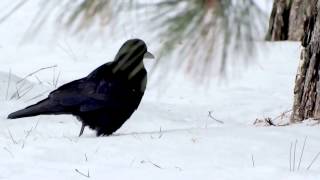
juvenile Tupkaragan, Mangystau.
- status in Kazakhstan
- nests here · on migration · winters here
- conservation status
- IUCN LCleast concern
- sizes
- 43–50 cm, wingspan 88–100 cmweight 300–500 g
- when to see it
- February — Octoberwinters: November — January
- on the site
- 949 observationslast: 31 Oct 2026
- videos
- 4
Description
Размерами с ворону, несколько более стройный и легкий. Всё оперение угольно-черное, с сильным блеском и фиолетовым отливом. У взрослых основание клюва лишено перьев и имеет грязно-белый цвет. Полового диморфизма нет. У молодых основание клюва оперено, и их легко спутать с черными воронами, следует отличать по более легкой фигуре и более узким и длинным крыльям, а в основном - по более тонкому клюву клиновидной формы: конек надклювья имеет слабый изгиб на протяжении всей длины. У грача перья на боках и бедрах удлинены в виде "штанов"; на темени перья слегка приподняты в виде округлого бугорка. Перья выпадают на основании клюва в середине - конце первой зимы, так что годовалые птицы похожи на старых, но все же голый участок "лица" у них меньше, а у некоторых особей перья сохраняются всё 2-е календарное лето до августа - сентября. Вес 300-500 г, длина 43-50, крыло 28.0-34.0, размах 88-100 см.
Distribution
It inhabits most of Europe and Asia. In Kazakhstan the Rook nests almost the entire territory. More detailed distribution in Kazakhstan, please see in Subspecies section.
- I
- II
- III
- IV
- V
- VI
- VII
- VIII
- IX
- X
- XI
- XII
- Breeding
- Migration
- Wintering
Map © Birds.kz. Copying without permission is prohibited
Subspecies
Latest observations
all species photos · 949 → 2


Species videos · 4
all species videos · 4 →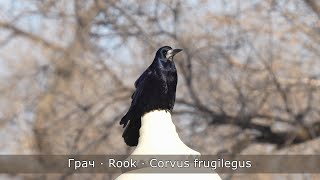


Biology
Abundant breeding migrant and common winter visitor. Inhabits the edges of riparian, deciduous and mixed forests near the open lands; the groves, shelterbelts, trees in towns and villages; more rare lives in bushy thickets around the water in open landscapes; prefers vicinity of cultivated areas with cereal fields on plains and in foothills. Several colonies of pastinator found in Altai at 1450-1600 m. During migration and wintering occurs in towns, villages, on stubble fields, meadows and hayfields. Very gregarious species, most of the year lives in flocks numbering from several dozen to thousand birds, gathering in thousands at the roost sites. Spring migration begins in late February – early March, with arriving of most birds in first half of April; the last birds (second-years or non-breeding individuals) flies by Chokpak Pass in mid May. Breeds in colonies from 10 to 50 000 pairs which settled in March – April, sometimes together with breeding Great Cormorant, Grey Heron and Night Heron. Nest is located on tree (willow, elm, poplar, birch, pine or asp), in bush (russian olive, willow, honeysuckle, dogrose) at height 0.5-20 m above the ground or as an exclusion even on reeds; often close to other nests (e.g. up to 50 nests on one tree). Both partners repair an old nest or build new one from twigs and lined it with dry grass and some hair. Clutch of 3-6 eggs is laid in mid April – early May. Female incubates clutch while male bring the food to her and to the juveniles in first few days after hatching. Later both parents feed juveniles which fledge in end of May – mid June. Repeated breeding attempts after the first clutch loss are common. Autumn migration begins in mid – late September, most birds depart in October.
Sources
Gavrilov E. I., Gavrilov A. E. "The Birds of Kazakhstan". Almaty, 2005. Э.И.Гаврилов. "Фауна и распространение птиц Казахстана". Алматы, 1999. В.К.Рябицев. "Птицы Урала, Приуралья и Западной Сибири". Екатеринбург. Изд-во Уральского университета, 2000.