Little Owl
Athene noctua Scopoli, 1769
Байғыз

 1 / 2
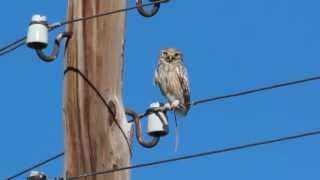
adult Jelturanga, lower current of Ile river, Almaty oblast
juvenile Kanshengel, Taukum sands, Southern Trans-Balkhash area
- status in Kazakhstan
- nests here · winters here
- conservation status
- IUCN LCleast concern
- sizes
- 23–28 cm, wingspan 56–61 cmweight 120–220 g
- when to see it
- March — Augustwinters: September — February
- on the site
- 434 observationslast: 1 Nov 2026
- videos
- 3
Description
Домовый сыч размером с дрозда. Окраска буровато- или рыжевато-серая с многочисленными белыми и беловатыми пятнами и пестринами. "Ушек" нет, глаза желтые. Более всего похож на мохноногого сыча, отличается от него гнездовым ареалом и местообитанием, имеет не столь рыхлое оперение, поэтому выглядит меньше, лицевой диск как бы приплюснут, белые пестрины на голове удлиненные, пальцы ног оперены только у основания. Может встретиться в одной местности со сплюшкой, отличается от нее отсутствием "ушек", "плоской" головой и приплюснутым лицевым диском, нет поперечного струйчатого рисунка. Различий в окраске самцов и самок нет, самки чуть крупнее. Молодые похожи на взрослых больше, чем у других мелких сов, но все же хорошо отличаются более темной и однотонной бурой окраской туловища, пестрины выражены слабее. В сентябре-октябре надевают первый взрослый наряд и отличаются только по контактному признаку: до мая - июня маховые перья остаются птенцовыми, они мягкие и равномерно обношены, у взрослых маховые явно различаются по обношенности из-за постепенной их смены. Вес 120-220 г, длина 23-28, крыло 15,6-17,7, размах 56-61 см.
Distribution
The Little Owl breeds mostly in the southern part of Kazakhstan, all the year round it lives on breeding areas. Please see the detailed distribution in Kazakhstan in the section Subspecies
- I
- II
- III
- IV
- V
- VI
- VII
- VIII
- IX
- X
- XI
- XII
- Breeding
- Migration
- Wintering
Map © Birds.kz. Copying without permission is prohibited
Subspecies
- Little Owl Athene noctua noctua
- Little Owl Athene noctua indigena
- Little Owl Athene noctua bactriana
- Little Owl Athene noctua orientalis
- Little Owl Athene noctua plumipes
Latest observations
all species photos · 434 →


 2
Species videos · 3
all species videos · 3 →

Biology
The Little Owl is common resident. It inhabits the sandy, clayey or stony deserts and semi-deserts with combs or dried rivers; xerophytic low mountains and chinks; forestless foothills of main ridges up to 1500-2000 m. Generally it prefers open countries; likes to perch on stones, poles, human constructions; avoids of trees and shrubs. Breeds in separate pairs, not less than 0.5 km one from another. It builds the nest in cavities of precipices or rocks; between stones; in holes of rodents; tree holes; old cemetery monuments; uninhabited houses and sheep-folds; under the bridges. Clutch of 4-8 eggs is laid in April – May. Female incubates for 28 days from laying of first egg; male feeds her and afterwards the brood. Fledglings at the age about one month recorded from the mid-June. After the several weeks the broods break up; and juveniles begin to disperse not far from birthplace. The basic food is the rodents; in villages it usually is mouse and rats; sometimes not less in weight than Little Owl. It perhaps is most brave hunter from all predators. Perching somewhere on the prominence it wait the prey. Eats also insects, most of all the large bugs. Besides it catches lizards and small birds. Most activity time is the evening and morning twilights. Quite often it also hunts in the afternoon. Usually in the afternoon Little Owls sit on the open prominence and barely rest. It lives in stable pairs on the own territory all the year round.
Sources
Gavrilov E. I., Gavrilov A. E. "The Birds of Kazakhstan". Almaty, 2005.
В.К.Рябицев. "Птицы Урала, Приуралья и Западной Сибири". Екатеринбург, Изд-во Уральского университета, 2000.
Э.И.Гаврилов. "Фауна и распространение птиц Казахстана". Алматы, 1999.