
Mute Swan
Cygnus olor Gmelin, 1789
Сыбырлақ аққу

 1 / 2
adult Kirovskoe Lake, Akjaik region, West Kazakhstan oblast
family Delta of Ural river
- status in Kazakhstan
- nests here · on migration · winters here
- conservation status
- IUCN LCleast concern
- sizes
- 145–160 cm, wingspan 208–238 cmweight 5.5–14.3 kg
- when to see it
- March — Octoberwinters: November — February
- on the site
- 1058 observationslast: 8 Oct 2026
- videos
- 1
Description
Размеры примерно как у кликуна. Основной признак - красный клюв с черным наростом на лбу и черным основанием. Издали сидящего на воде или на берегу шипуна можно узнать по манере иногда складывать крылья на спине пышным "домиком", шея относительно более толстая, чем у кликуна, обычно с изящным S-образным изгибом, клюв немного опущен. Самка немного меньше самца, нарост на клюве у нее меньше. Молодые буровато-серые, на лбу нароста нет, но хорошо видно черное основание клюва. Вес 5.5-14.3 кг, длина 145-160, крыло самцов 58.0-62.3, самок - 53.3- 58.9, размах 208-238 см.
Distribution
Breeds and migrates practically everywhere on the steppes of Kazakhstan. On 7 November 1973, four birds recorded in highlands (Bolshoye Almatinskoye Lake). Winters on Northern Caspian Sea, Mangyshlak. During mild winters observed on Aral Sea near Barsa-Kelmes island; occasionally to the south of Turkestan and Chimkent.
- I
- II
- III
- IV
- V
- VI
- VII
- VIII
- IX
- X
- XI
- XII
- Breeding
- Migration
- Wintering
Map © Birds.kz. Copying without permission is prohibited
Latest observations
all species photos · 1058 →

 3

Species videos · 1
all species videos · 1 →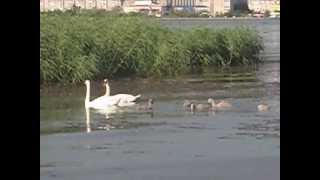
Biology
Common breeding migrant. Inhabits fresh and salty lakes with reed beds and reed mace. Appears end February – early March in southern areas, and end March – early April in the North. Migration continues to mid-May. Breeds in separate pairs up to 500-1500 m. Large nest built in reed or mace beds in shallow water from dry reed stems. The inner cup is not particularly lined although some pieces of water grass and down appear in nests during incubation. Clutches of 3-7 eggs in mid-April – early May, sometimes earlier; and towards the end June, which can be replacement clutches. Female mostly incubates, male may sit for short periods. Juveniles hatch end May - June and begin to fly in August – September, and sometimes only at end of October. Adults moult while tending the brood, immature birds moult in flocks of several hundred on large lakes. Autumn migration lasts from end August – September to mid – end October or even to mid December, depending on when lakes begin to freeze. Adults with offspring leave together. Huge concentrations in shallow waters of Northern Caspian Sea in autumn. Birds ringed at Kurgaldzhino Lakes were found in winter on Caspian Sea (Kara-Bogaz-Gol, Dagestan), at Kabardino-Balkariya and at Kherson Region and Krym, Black Sea.
Sources
Gavrilov E. I., Gavrilov A. E. "The Birds of Kazakhstan". Almaty, 2005. Э.И.Гаврилов. "Фауна и распространение птиц Казахстана". Алматы, 1999. В.К.Рябицев. "Птицы Урала, Приуралья и Западной Сибири". Екатеринбург. Изд-во Уральского университета, 2000.