
Common Kestrel
Falco tinnunculus Linnaeus, 1758
Кәдімгі күйкентай

 1 / 2
male Semipalatinsk
female Almaty. Dendropark.
- status in Kazakhstan
- nests here · on migration · winters here
- conservation status
- IUCN LCleast concern
- sizes
- 31–39 cm, wingspan 69–82 cmweight 115–205 g
- when to see it
- March — Octoberwinters: November — February
- on the site
- 2072 observationslast: 1 Nov 2026
- videos
- 8
Description
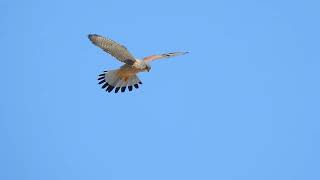
Небольшой сокол (с голубя) светло-рыжей окраски. Из всех мелких соколов имеет наиболее широкие и закругленные крылья, хвост длинный. У самца серая голова, хвост тоже серый (иногда слабо видны темные поперечные полосы), с широкой темной предвершинной полосой, концы рулевых беловатые. Отличается от самца степной пустельги наличием темных пестрин по рыжему верху, отсутствием голубого оттенка на голове, хвосте и голубой полосы на крыле. Самка снизу светло-охристая, с продольными округлыми и сердцевидными бурыми пятнами. Верх и голова более темные, рыжие, с бурыми пятнами, в основном поперечными. У самок есть сизый налет на надхвостье, а бывает и на голове, так что некоторые могут выглядеть похожими на самцов, однако хвост всегда с четкими поперечными полосами. Молодые очень похожи на самку, но все пестрины на груди продольные (издали не видно), не бывает сизого налета на голове, иногда бывает серый налет на надхвостье. В дополнение к другим признакам, самец, самка и молодые отличаются от степной пустельги закругленным (не клиновидным) хвостом. Когти у всех птиц черные. У всех желтые восковица, окологлазное кольцо и ноги. У годовалых птиц окраска промежуточная между ювенильной и взрослой. Характерная особенность поведения пустельг - часто и подолгу трепетать ("трястись") в воздухе над одним местом. Вес самцов 115-205, самок - 135-260 г, длина 31-39, крыло самцов 23.3-25.8, самок - 22.9-27.5, размах 69-82 см.
Distribution
Breeds everywhere in Kazakhstan; prefers the plains and river valleys with trees and shrubs vegetation, the xerophytic mountains and highlands (at Bolshoye Almatinskoye lake, 2700-2800 m). On migration occurs everywhere. Rare winters in south and south-east, sometimes in vicinities of Semipalatinsk, and Zerenda.
- I
- II
- III
- IV
- V
- VI
- VII
- VIII
- IX
- X
- XI
- XII
- Breeding
- Migration
- Wintering
Map © Birds.kz. Copying without permission is prohibited
Subspecies
- Common Kestrel Falco tinnunculus tinnunculus
Latest observations
all species photos · 2072 → 2

 2
 4
Species videos · 8
all species videos · 8 →


Biology
Kestrel is common breeding migrant. Inhabits the forest-steppes, steppes and deserts with groves, riparian woods, shelterbelts, clay and rock precipices surrounding the open areas; the low mountains, foothills and highlands in places with forests and grass slopes. In spring appears in March – early April, at Chokpak Pass the migration continues in April and finishes in mid-May. Breeds in separate pairs or very rare in small groups of 5-10 pairs. Kestrel very rarely builds the nest on their own, more often uses the old nests of Crows, Magpies, Rooks, Kites, Eagles. Nests may be placed on trees, bushes, in cavity of precipice or rock. Clutches of 3-7 eggs is in April or in early May. Female incubates mostly, but male relays female on short time, and brings the food. Incubating lasts about a month from the laying of the first egg. Chicks are born in mid May – June, both parents feed them and they fledge in end May – July. Re-laying after the loss of first clutch is possible. The autumn migration singly or in small loose groups begins in mid August. From northern Kazakhstan Kestrels disappear in mid-September, but at Chokpak Pass the most active traffic of migration is from the third decade of September to second decade of October, the latest birds observed in early November.
Sources
Gavrilov E. I., Gavrilov A. E. "The Birds of Kazakhstan". Almaty, 2005. Э.И.Гаврилов. "Фауна и распространение птиц Казахстана". Алматы, 1999. В.К.Рябицев. "Птицы Урала, Приуралья и Западной Сибири". Екатеринбург. Изд-во Уральского университета, 2000.