
Black-tailed Godwit
IUCN Red List
NT · Near Threatened
iucn text near threatened
IUCN assessment: 2025 · iucnredlist.org
Limosa limosa Linnaeus, 1758
Үлкен шырғалақ


 1 / 3
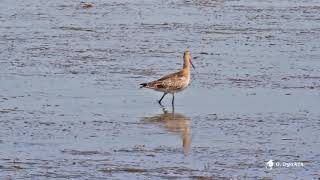
adult, summer Irgiz region. Aktobe oblast.
in flight Sorbulak, Almaty oblast.
adult, winter Sorbulak lake system. Almaty oblast.
- status in Kazakhstan
- nests here · on migration
- conservation status
- IUCN NTnear threatened
- sizes
- 36–44 cm, wingspan 62–70 cmweight 200–500 g
- when to see it
- March — November
- on the site
- 547 observationslast: 20 Jul 2026
- videos
- 2
Description
Крупный (с голубя) длинноногий и очень длинноклювый кулик. Окраска головы, шеи и верха груди самца в брачном наряде ярко-рыжая, низ груди - сочетания рыжих, белых и темно-бурых пестрин, брюхо белое с немногими темными пестринами. У самки голова, шея и верх груди охристо-серые. Самки немного крупнее самцов. Осенью взрослые преимущественно серовато-бурые. Молодые рыжевато-охристые. Основные отличия от малого веретенника: во всех нарядах яркая белая полоса вдоль крыла, надхвостье и основание хвоста белые, конец хвоста черный. Кроме того, большой веретенник более длинноног, имеет более массивный клюв со слабым изгибом кверху, розовато- или оранжево-желтый с темной вершиной, у самца больше пестрин и не рыжее брюхо. Вес 200-500 г, длина 36-44, крыло 19.4-23.1, размах 62-70 см.
Distribution
Breeds in northern part of Kazakhstan, in south to Kamysh-Samar lakes, lower reaches of Irgiz, upper reaches of Sarysu river, and Alakol depression. On migration occurs everywhere, except the waterless and highland areas.
- I
- II
- III
- IV
- V
- VI
- VII
- VIII
- IX
- X
- XI
- XII
- Breeding
- Migration
- Wintering
Map © Birds.kz. Copying without permission is prohibited
Subspecies
- Black-tailed Godwit Limosa limosa limosa
Latest observations
all species photos · 547 → 3
 4

 2
Species videos · 2
all species videos · 2 →
Biology
Common breeding migrant. Inhabits the wet meadows, grassy shores of lakes and rivers, the flooded grassy lands, and rarer the wet saline soil lands near lakes. In spring appears in end March - April, in flocks up to one hundred birds. Most birds arrive in April, migration finishes in early – mid-May. Breeds in separate pairs or in loose colonies of up to 10 pairs, often together with other waders. Nest is built in shallow hole and is lined with some old grass; nest is located mostly on the dry soil, but nests located on the wet soil are thick and bulky. Laying of 4 eggs is in end of April to early June. Both parents incubate and care for juveniles which are born in the end of May – early June, and fledge in the end of June – July. Autumn migration is in end July – August, latest birds were observed in end September.
Sources
Gavrilov E. I., Gavrilov A. E. "The Birds of Kazakhstan". Almaty, 2005. Э.И.Гаврилов. "Фауна и распространение птиц Казахстана". Алматы, 1999. В.К.Рябицев. "Птицы Урала, Приуралья и Западной Сибири". Екатеринбург. Изд-во Уральского университета, 2000.