
Goldcrest
Regulus regulus Linnaeus, 1758
Сарыбас шөже

Western Kazakhstan. Syrym region. Ulenta.
- status in Kazakhstan
- nests here · on migration · winters here
- conservation status
- IUCN LCleast concern
- sizes
- 9–11 cm, wingspan 15–17 cmweight 4–8 g
- when to see it
- April — Octoberwinters: November — March
- on the site
- 477 observationslast: 7 Oct 2026
- videos
- 2
Description
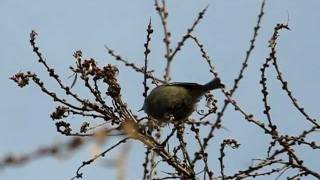
Очень маленькая птица. Верх оливково-зеленый, низ беловато-серый. Телосложением похож на пеночек, но еще более маленький, короткохвостый и большеголовый. Наиболее заметный элемент окраски - продольная полоска на темени (у самца желто-оранжевая или желтая у подвида tristis, у самки желтая и немного уже), окаймленная по бокам черным (черный цвет слабо выражен или отсутствует у птиц подвида tristis). Остальное оперение головы светлее и серее спины, вокруг глаза еще более светлое поле. На крыле две светлые поперечные полоски. Взрослого королька можно спутать только с редкой корольковой пеночкой, отличается от нее отсутствием желтой брови и темной полосы через глаз, желтого пятна на пояснице. Молодые несколько бурее взрослых, до осени нет желтой полосы на голове, их следует отличать от пеночек по полному отсутствию светлой брови, светлой голове. Осенью становятся похожими на самку, но рисунок головы тусклее. Вес 4-8 г, длина 9-11, крыло 4.9-5.9, размах 15-17 см.
Distribution
In Kazakhstan Goldcrest breeds only in the spruce forests of Tien Shan and Dzhungar Alatau. On winter wandering occurs also in other parts of Kazakhstan. Please see the detailed distribution in the Subspecies chapter.
- I
- II
- III
- IV
- V
- VI
- VII
- VIII
- IX
- X
- XI
- XII
- Breeding
- Migration
- Wintering
Map © Birds.kz. Copying without permission is prohibited
Subspecies
Latest observations
all species photos · 477 →

 3

Species videos · 2
all species videos · 2 →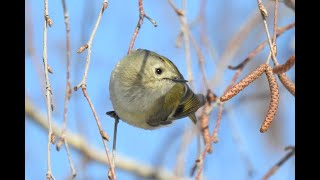
Biology
Common resident. Inhabits spruce and fir forests at 1700-2600 m in Zailiyskiy Alatau and 1450-1600 m in Altai. During dispersal and wintering occurs in floodplain and riparian forests, other deciduous and mixed forests, groves, shelterbelts, bush thickets and tall weeds thickets. Breeds in separate pairs, quite far from each other. Nest is located in spruce twig at height 2.5-15 m above the ground; nest is built from moss, lichen, cobweb, hair, plant fluff and grass bast and is lined with plenty of feathers. Both partners build nest for 17-20 days. Clutch of 7-9 eggs is laid in mid-May to early July. Only female incubates for 16-18 days, male brings food to female. Both parents feed juveniles which fledge at age 18-20 days old, in end of June – mid-July. One brood per season, repeated breeding after loss of first clutch is common. Autumn-winter dispersal in loose flocks up to one-two dozen birds or singly begins mainly in September – October. The return spring movement is not so marked, latest wandering birds recorded in February, March or even in early May.
Sources
Gavrilov E. I., Gavrilov A. E. "The Birds of Kazakhstan". Almaty, 2005. Э.И.Гаврилов. "Фауна и распространение птиц Казахстана". Алматы, 1999. В.К.Рябицев. "Птицы Урала, Приуралья и Западной Сибири". Екатеринбург. Изд-во Уральского университета, 2000.